Residents of Erlangen-Bruck who harness the sun’s energy in the summer can meet nearly all of their hot water needs using renewable energy. Retrofitting existing homes with solar thermal systems is relatively straightforward, and the 2026 BAFA subsidy makes the investment more attractive than ever. The potential is particularly significant in a neighborhood like Bruck, with its mix of Wilhelminian-style and post-war buildings.
Solar Thermal Energy in Summer: Physical Principles and Potential
Solar collectors convert solar radiation into usable heat. Unlike photovoltaics, which generate electricity, solar thermal systems provide thermal energy directly for hot water and supplemental heating. In the summer, when solar radiation in the Nuremberg metropolitan region ranges from 4.5 to 5.5 kWh/(m²·day), a properly sized system can fully meet the daily hot water needs of a typical household-without burning gas or consuming electricity.
Technically, there are two types of collectors:
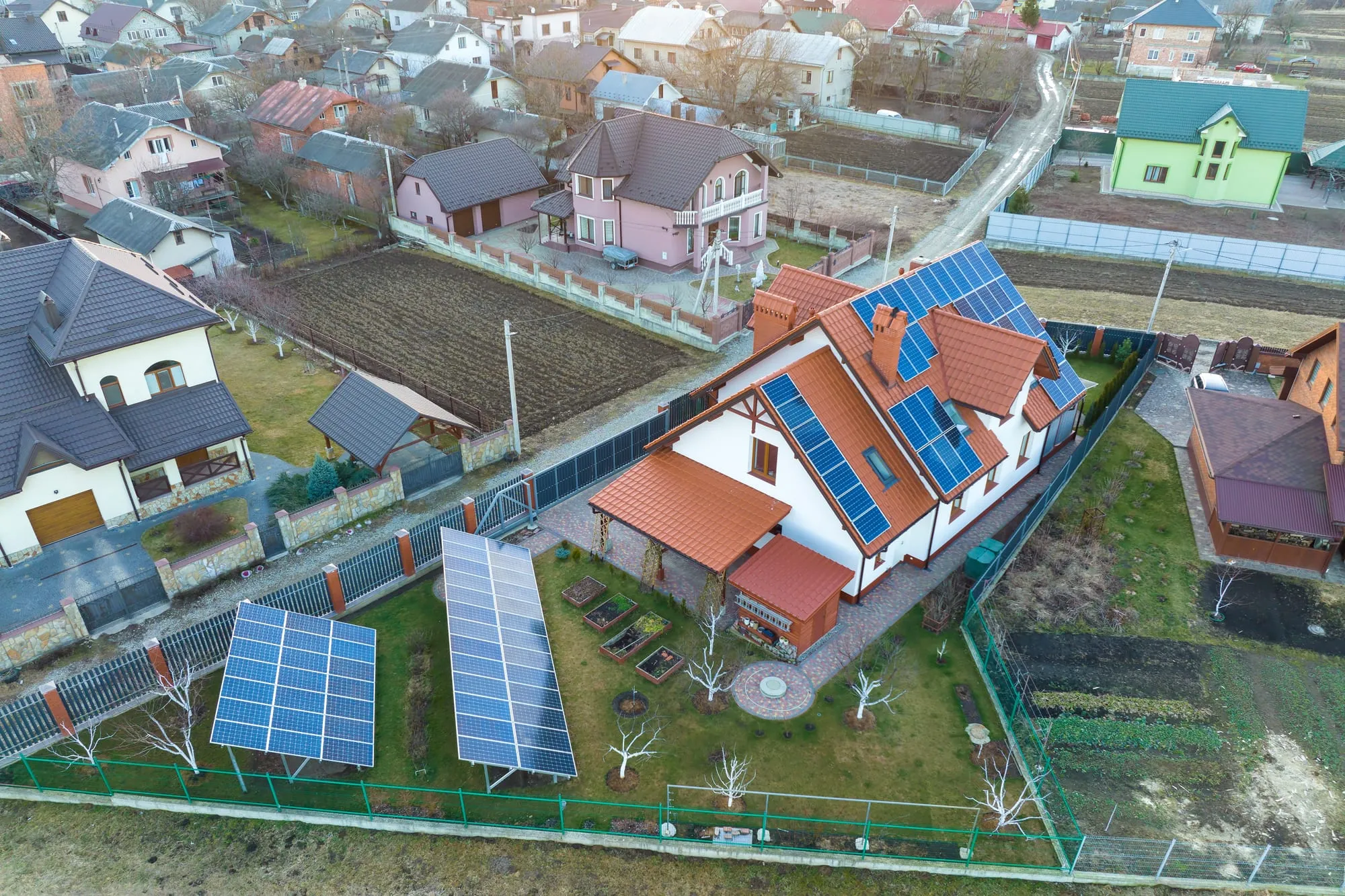
Flat-plate collectors are by far the most common design for single-family homes. They consist of an absorber in an insulated housing with a glass cover; they are robust and low-maintenance. They are ideally suited for roof-mounted systems with a south-facing orientation and an angle of inclination between 30 and 60 degrees-a configuration found on many of the typical post-war gabled roofs in Erlangen-Bruck.
Vacuum tube collectors achieve higher temperatures and are more efficient in diffuse light and at low outdoor temperatures. However, they cost significantly more per square meter and are rarely necessary for hot water production alone during summer operation in Bavaria.
For newcomers, the German Energy Agency (dena) in Bavaria generally recommends flat-plate collectors as the first choice for retrofit projects in single-family homes.
Another important aspect is overheating protection: In midsummer, a solar thermal system can generate significantly more energy than is needed-especially when residents are away or hot water demand drops. Without protection, the system can overheat and the solar fluid can boil. Modern systems feature automatic pressure relief valves, temperature controllers, and emergency drain functions. When purchasing a system, this aspect should be explicitly discussed with the solar installer and included in the quote. Stagnation protection is particularly important for safety during the sunny summer season in Erlangen-Bruck-with up to 300 hours of sunshine in July.
Market Data 2026: Costs, Subsidies, and Yield Estimates for Erlangen
| System Size | Collector Area | Investment (incl. storage tank, installation) | BAFA Subsidy (25%) | Out-of-Pocket Cost | Solar Coverage Rate |
|---|
| Hot water for single-family home, 3-4 people | 4-6 m² flat-plate | €4,500-7,000 | €1,125-1,750 | €3,375-5,250 | 55-65% (annual) |
| Hot water for single-family home, 5-6 people | 6-8 m² flat-plate | €6,000-9,000 | €1,500-2,250 | €4,500-6,750 | 50-60% (annual) |
| Combination system (DHW + heating) | 10-14 m² flat-plate | €10,000-18,000 | €2,500-4,500 | €7,500-13,500 | 20-35% (heating) |
| Vacuum tubes, small single-family home | 3-5 m² vacuum | €6,000-9,500 | €1,500-2,375 | €4,500-7,125 | 60-70% (annual) |
Source: BAFA Federal Funding for Efficient Buildings (BEG EM) Solar Thermal System Funding, guidelines as of January 2026; cost indicators from the solar industry BSW-Solar Market Monitor 2025; irradiance data from DWD Climate Atlas Bavaria, Nuremberg/Erlangen measuring station.
The key additional incentive is the iSFP implementation bonus: If an individual renovation roadmap is available, the BAFA subsidy rate increases to 30 percent instead of 25 percent. For an €8,000 system, this means €400 more in subsidies-for a consultation that costs virtually nothing net after the BAFA subsidy.
For the cost-benefit analysis, the key metric is the avoided energy purchase: Anyone who does not run a gas or oil burner for hot water in the summer saves around 12 to 15 cents per kWh in gas costs (Bavarian household gas tariff, Q1 2026). With an annual thermal output of 2,500 kWh (typical for a 5-m² system in Erlangen), this results in annual energy cost savings of 300 to 375 euros. If we factor in the out-of-pocket cost of approximately 4,500 euros after BAFA funding, the payback period is 12 to 15 years-and that’s for a system with a 25- to 30-year lifespan. The net economic benefit after payback is therefore 10 to 18 years of pure savings.
One factor that is often underestimated is hot water preheating, even in winter: Even during the months of October through March, a flat-plate collector in Erlangen can cover 30 to 60 percent of hot water demand on warm, sunny days. This means the system operates profitably even outside the peak season. The annual solar coverage rate for Erlangen-Bruck is therefore realistically between 55 and 65 percent-significantly higher than in northern German regions with fewer hours of sunshine.
In Practice: Retrofit Step by Step
A solar thermal retrofit in an existing building in Erlangen-Bruck follows a clear process:
Step 1: Preliminary check of the roof and plumbing. A solar technician assesses the roof’s structural integrity (flat-plate collectors weigh 20-40 kg/m²), the roof orientation, potential shading from dormers or neighboring buildings, and the existing hot water storage tank. In Bruck, due to the dense development of post-war housing estates, there are occasionally shading issues caused by trees or neighboring roofs-simulation using planning software provides clarity here.
Step 2: Storage Concept. For existing boilers and storage tanks, it must be determined whether the buffer tank is sufficient or needs to be replaced. For a 5-m² system, a storage tank of 300 to 400 liters is recommended. Combined solar buffer tanks with an integrated heat exchanger facilitate hydraulic integration.
Step 3: BAFA application before placing the order. The BAFA subsidy must be applied for before the project begins. The online portal (mein.bafa.de) is user-friendly. Confirmation typically arrives within a few days as an automatic application confirmation; this means the subsidy application is considered submitted and the project may begin.
Step 4: Installation and commissioning. A flat-plate collector system is installed in 1 to 2 days. Upon completion, the solar technician issues all necessary documentation for BAFA billing.
Step 5: Maintenance and Monitoring. Solar thermal systems require little maintenance: The solar fluid (antifreeze mixture) should be checked once a year, and a more extensive maintenance check is recommended every 4 to 5 years. Modern systems feature app-based system monitoring that provides yield and error alerts.
> The valuation tool from leadmarkt.ch provides an initial estimate of the market value of your Erlangen property-including solar thermal value-added-based on data and free of charge.
Local Context: Erlangen-Bruck between the Siemens Campus and a New Development Area
The Bruck district in western Erlangen offers unique conditions for solar thermal projects. The characteristic single-family homes from the 1950s to the 1970s in the Bruckersiedlung neighborhood and along Äußere Brucker Straße typically have gabled roofs with usable south-facing surfaces and sufficient roof space for collectors ranging from 4 to 10 m².
At the same time, Bruck is located in close proximity to the expanding Siemens Campus Erlangen, which drives demand for energy-efficient residential buildings among tech-savvy employees and engineers. This target group particularly values solar thermal systems: they like to do the math and understand the return on investment.
Erlangen also boasts local expertise in renewable energy through the Erlangen Institute for Energy Economics at Friedrich-Alexander University (FAU). Local contractors in Erlangen who install solar thermal systems benefit from this knowledge base and are often well-trained. Nevertheless, it is always advisable to compare at least three quotes from local solar installers.
According to the Erlangen Expert Committee (2025 Annual Report), properties in Erlangen-Bruck with a documented solar thermal system and a good energy performance certificate command price premiums of 3 to 7 percent compared to comparable, unrenovated properties. Demand from the Siemens and FAU communities ensures that this premium is more stable than in other regions.
The development structure of the post-war neighborhoods in Erlangen-Bruck is also particularly conducive to solar thermal systems: the mostly detached single-family homes with ample roof space, minimal mutual shading, and good southern exposure are nearly ideal installation sites. Problems with neighboring buildings that impair solar radiation in denser downtown areas rarely occur in the typical Bruck neighborhood. This increases the system’s annual yield and improves its cost-effectiveness.
Anyone in Erlangen-Bruck who already has or is planning a solar thermal system should also document the system in the purchase contract and the energy performance certificate as a value-adding feature. A current energy performance certificate that includes the solar system and the resulting improved primary energy class is a concrete selling point-and can make the difference between a quick sale and a long period of unsold listings.
Conclusion for Homeowners in Erlangen-Bruck
Retrofitting a solar thermal system in the summer of 2026 is an attractive investment in Erlangen-Bruck: BAFA subsidies of 25 to 30 percent, an out-of-pocket cost of 3,500 to 7,500 euros for a typical single-family home project, and a payback period of 10 to 14 years speak for themselves. In the summer, the system covers nearly all hot water needs, and the increase in value on the Erlangen real estate market is measurable.
Before you request a quote, it’s worth taking a look at your property’s current market value: The valuation tool from leadmarkt.ch shows you how solar thermal systems and other renovation measures affect the value of your Brucksiedlung property-quickly, data-driven, and without registration.
Solar Thermal vs. Heat Pump: A Comparison for Erlangen-Bruck
A common question in Erlangen-Bruck: Is solar thermal or a heat pump the better investment? The answer depends on the existing heating system:
Solar thermal is suitable for:
- Owners with a still-functioning gas or oil heating system who want to reduce hot water costs
- Buildings without sufficient land area or a drilling permit for geothermal energy
- Homeowners planning a phased renovation and choosing solar thermal as the first step
Heat pumps are suitable for:
- Complete heating system replacement when the old system needs to be replaced anyway
- Buildings with low heating demand (KfW 70 or better, or after insulation)
- When electricity is available from a private PV system
In Erlangen-Bruck, with its existing buildings from the 1950s-1970s, the combination of solar thermal + gas (as a transitional solution for 5-10 years until the next heating system replacement) is often more economically sensible than an immediate, expensive heat pump installation in a poorly insulated older building. The BAFA subsidy applies to both options.
System Design: Collector Area and Storage Volume
For a typical property in the Brucksiedlung neighborhood (4-person household, 150 m² living space, bivalent solar thermal for hot water), installation companies in Erlangen recommend:
| Parameter | Guideline Value |
|---|
| Collector area (flat-plate collector) | 4-6 m² |
| Collector area (tube collector) | 3-5 m² |
| Solar storage tank | 300-400 liters |
| Solar coverage rate for hot water | 55-70% annual average |
| Annual energy savings | 600-900 kWh |
| Reduction in CO2 emissions | 120-180 kg CO2/year |
Obtaining three quotes is particularly important in Erlangen: Price differences between solar installation companies in Erlangen often range from 15-25% for comparable systems. A comparison via the platforms EnergieberaterBayern.de or SHK-Bayern.de makes the initial selection easier.
Compiled by the my-home.de editorial team in collaboration with regional real estate analysts. Data as of: May/June 2026.