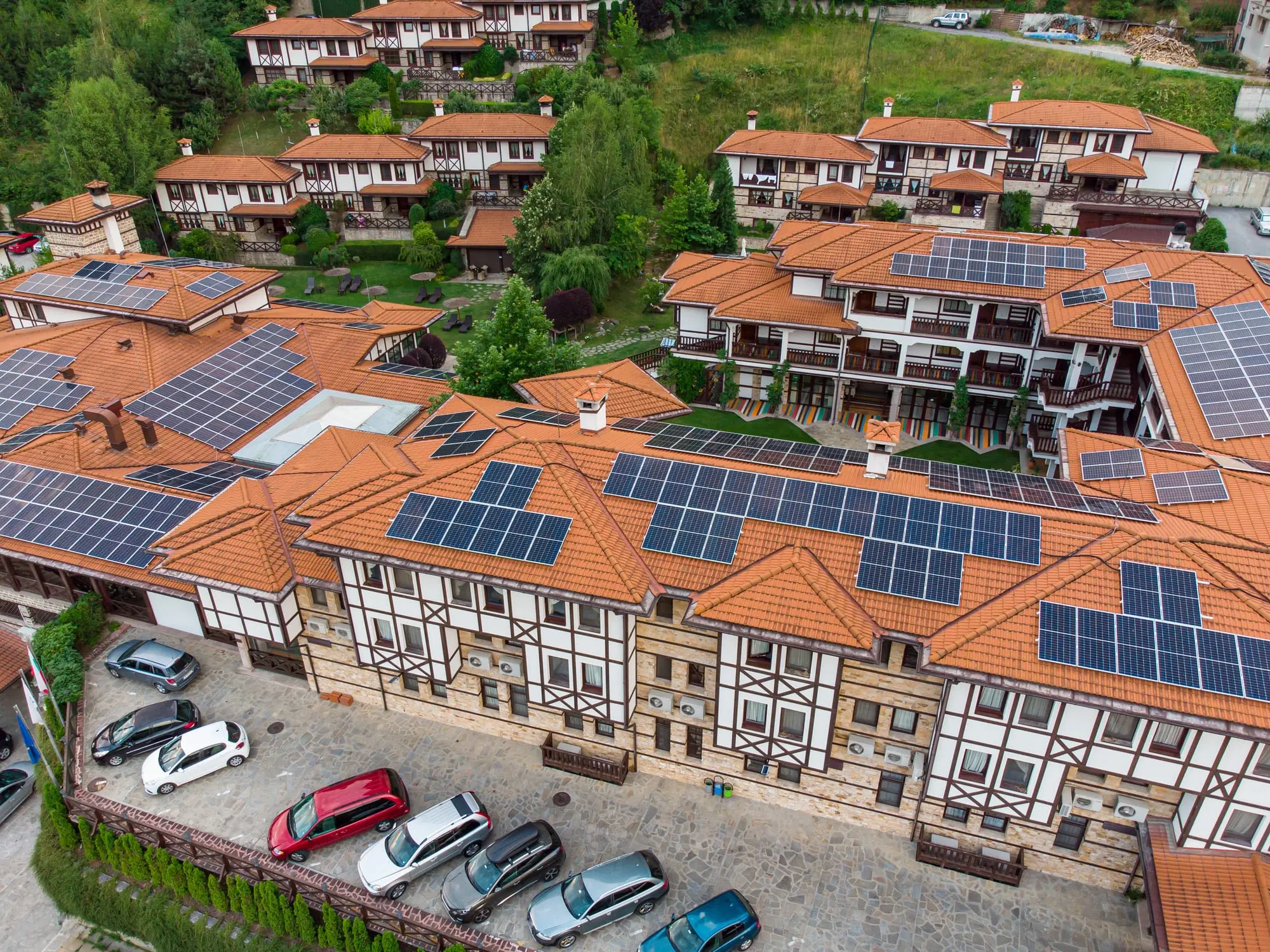
A well-lit attic is more in demand than ever in Erlangen in 2026-scarce living space and rising rents are making even previously unused attic spaces attractive. Skylights are the key: they bring in natural light and fresh air and enhance the quality of life. Market leaders such as Velux and FAKRO now offer energy-efficient solutions that qualify for subsidies and measurably increase property value.
Roof Windows: Types, Standards, and GEG Requirements
The market for roof windows in Germany is dominated by a few manufacturers. Velux (Danish, market leader), FAKRO (Polish), and Roto (German) together cover over 90 percent of the German market. The product range extends from simple standard windows to high-efficiency models with triple glazing, electric motors, integrated roller shutters, and smart home connectivity.
The Building Energy Act (GEG) imposes the same requirements on the installation of roof windows as it does on vertical windows: According to GEG § 48, the U-value may not exceed 1.3 W/m²K. A stricter limit applies for BAFA subsidies: Windows with a U-value ≤ 0.95 W/m²K are eligible for funding.
Typical product categories for 2026:
- Standard (double glazing): U-value 1.1-1.3 W/m²K. GEG-compliant, but not eligible for BAFA funding.
- Energy-saving (triple-pane): U-value 0.74-0.95 W/m²K. Eligible for BAFA funding, base funding rate 15%.
- Premium (triple-pane, argon-filled, Warm-Edge): U-value 0.62-0.74 W/m²K. Highest BAFA subsidy rate with iSFP bonus (20%).
Roof windows have the advantage over dormers in that they are easier to install, more affordable, and generally do not require a permit. They have less of an impact on the roof structure and can also be retrofitted into insulated roofs.
From a building physics perspective, the tendency for condensation must be considered when planning roof windows: In poorly insulated attics, the cold glass surface of a window can become a condensation surface in winter if the indoor air is too humid. High-quality windows with triple glazing and warm-edge spacers minimize this risk because the inner surface never gets as cold as it does with single-pane models. The combination of a good window and controlled ventilation (e.g., controlled residential ventilation in the attic) reliably prevents mold growth.
Another planning consideration is summer heat protection: roof windows receive more direct sunlight than vertical windows because the angles of incidence are steeper. Without external shading, the attic can become uncomfortably hot in the summer. Integrated external roller shutters or awnings (e.g., Velux MHL/MHK series) are therefore recommended during installation. These are not separately eligible for BAFA funding, but they enhance comfort and living atmosphere.
Market Data 2026: Costs, Funding, and Value Potential
| Window Type | U-Value | Product (Example) | Cost incl. Installation | BAFA Funding | Out-of-Pocket Cost |
|---|
| Standard PVC 78×118 cm | 1.1-1.3 | Velux GZL M06 | €700-1,100 | None | €700-1,100 |
| Energy-saving wood 78×118 cm | 0.74-0.95 | Velux GGL M06 Thermo | €1,100-1,600 | €165-240 (15%) | €935-1,360 |
| Premium PU 78×118 cm | 0.62-0.74 | Velux GPU M06 / FAKRO FTT | €1,500-2,200 | €300-440 (20% iSFP) | €1,200-1,760 |
| Electric + Shading | 0.74-0.95 | Velux GGL INTEGRA | €2,200-3,200 | €330-480 (15%) | €1,870-2,720 |
| Flat Roof Skylight (Akf.) | 0.75-1.0 | Velux CFP/CVP | €2,500-4,000 | €375-600 (15%) | €2,125-3,400 |
Source: BAFA Federal Funding for Efficient Buildings (BEG EM) Window Guidelines as of January 2026; Velux Price List Germany Q1 2026; Cost Indicators for the Roofing Trade in Bavaria 2025/2026.
For a typical attic conversion project in Erlangen with 4 windows (e.g., 2 bedroom windows and 2 bathroom skylights), the subsidy pays off significantly: With total costs ranging from 7,000 to 10,000 euros, the BAFA subsidy with the iSFP bonus results in a reimbursement of approximately 1,400 to 2,000 euros.
Practice: Planning and Installation in Existing Buildings in Erlangen
The technical planning of a roof window installation involves the following steps:
Roof structure and rafter spacing: Roof windows are installed between rafters. The existing rafter spacing determines which standard sizes can be installed without cutting the rafters. With a rafter spacing of 85 cm center-to-center, Velux M sizes (78 cm wide) fit without further modifications. If the rafter spacing is narrow, adjustments are necessary.
Flashing and roof waterproofing: The transition between the window and the roof deck is sealed with flashing. Special flashing is available for flat roofs, metal roofs, or unusual roof coverings. This component represents a significant cost and can add an additional 300 to 600 euros per window.
Interior trim and finish: The interior soffit finish (drywall, wood paneling, or factory-supplied) determines the room’s appearance. High-quality trim kits from Velux or FAKRO enable a seamless, clean finish.
Electrical connection for motorized windows: For electric drives and integrated roller shutter motors, an electrician must install a flush-mounted control channel or cable conduit. This increases installation costs by 200 to 500 euros per window.
Consider sound insulation. In Erlangen, particularly in urban areas near the city center or along busy streets such as Nägelsbachstraße or Erlangen-Bamberger Allee, sound insulation is a key consideration. Standard skylights achieve sound insulation ratings of Rw 30 to 35 dB. Special soundproof models (e.g., Velux GGL Soundproof) reach Rw 39 to 42 dB-recommended for bedrooms in urban areas. The additional cost for soundproof models is 200 to 500 euros per window.
Combining heating and skylights. If you also replace the roof insulation during skylight installation, you can have the entire project subsidized as a BAFA package. A combined application for roof insulation (eligible for up to 20% BEG EM) and windows (15% BEG EM) saves on administrative costs and increases the total subsidy amount. The advantage: Both measures can be combined into a single application if they are temporally and structurally linked.
> The valuation tool from leadmarkt.ch shows how skylights influence the market value of your Erlangen property-data-driven, free, and in just a few minutes.
Local Context: Erlangen and the Demand for Attic Apartments
As a university town and the headquarters of Siemens Healthineers, Erlangen is one of the fastest-growing cities in the Nuremberg metropolitan region. Housing is scarce, and attic apartments are therefore increasingly being developed as fully-fledged living spaces. The student population at Friedrich-Alexander University (FAU) and demand from high-earning professionals are driving the demand for attic apartments.
In the Wilhelminian-style apartment buildings in downtown Erlangen and in the villa districts near the Schlossgarten, many attics remain undeveloped. The combination of skylights and retrofitted thermal insulation of the roof structure allows for an expansion of living space without adding additional stories, making it one of the most cost-effective strategies for increasing property value.
Particularly in downtown Erlangen and in the urban area near Röthelheimpark (the modern science district surrounding the FAU Faculty of Engineering), converted attic apartments command prices per square meter that are significantly above the city average. The Erlangen Appraisal Committee (2025 Annual Report) lists prices for converted attic condominiums in Erlangen between €3,800 and €5,200 per square meter-compared to €3,200 to €4,400 per square meter for standard floors.
For owners of multi-family homes in Erlangen, attic conversions with skylights also serve as a rental income strategy: A newly created 40-square-meter attic apartment rented out for €1,800 (excluding utilities) yields a gross annual rent of €21,600. With conversion costs ranging from €80,000 to €120,000 (including windows, insulation, stairs, and bathroom), the gross rental yield on the capital invested is between 18 and 27 percent. The value added by a converted attic to the property as a whole is therefore significant.
A note regarding permitting requirements for WEG owners: In a homeowners’ association, the attic is often considered common property. Any individual owner wishing to convert the attic requires a resolution from the homeowners’ meeting and, if necessary, a special right of use agreement. These legal conditions should be clarified before any planning steps are taken.
Conclusion for Owners in Erlangen
In Erlangen in 2026, skylights are one of the most efficient individual measures for increasing property value if an attic is already fundamentally suitable for conversion. Modern energy-saving models are eligible for BAFA subsidies, reduce heating costs, and create light-filled living spaces that are particularly in demand on the Erlangen market.
Before planning any measures, it’s worth assessing the potential: The valuation tool from leadmarkt.ch shows you how much your converted attic in Erlangen could be worth-based on data and with no waiting time.
Types of Roof Windows: Selection and Technical Requirements
Not all roof windows are the same-products differ significantly in opening mechanism, glazing, and installation depth. Relevant for your selection in Erlangen:
Tilt-and-turn windows are the standard in German attic conversions. The sash rotates around a horizontal axis and, when fully open, exposes the entire light cross-section. Manufacturers such as Velux (GGL/GPL series) and FAKRO (FTP/FTS series) offer installation depths of 62 to 78 mm, which fit into standard 200-mm rafters.
Hinged windows (tilt-and-turn) open at the top or bottom edge-suitable for hard-to-reach roof areas or when the interior space below the window offers little room for opening.
Roof windows with integrated ventilation flaps provide continuous air exchange without needing to be fully opened-a practical feature in Erlangen’s condominium units, where tenants prefer controlled ventilation.
Glazing standards in GEG 2026: The U-value of roof windows must not exceed 1.4 W/m²K in new construction and mandatory renovations. Triple-glazed models achieve 0.5-0.7 W/m²K and are therefore mandatory for major roof renovations. In the context of BAFA funding, triple glazing is a prerequisite for the higher subsidy rate of 20% (instead of 15% for double glazing).
Planning: Flowchart from Concept to Installation
| Step | Time Required | Who is Involved |
|---|
| Site inspection (roof pitch, rafter layout, WEG status) | 1 day | Owner + contractor |
| Building code check (building plan, historic preservation) | 1-2 weeks | Erlangen Building Authority |
| Product selection and request for quotes | 2 weeks | Owner (3 quotes) |
| Submit BAFA application (before awarding the contract) | 1 week | Energy consultant or owner |
| Installation by a specialized contractor | 1-3 days | Roofing contractor |
| Acceptance and BAFA proof of use | 4 weeks after installation | Owner + energy consultant |
The BAFA application must be submitted before the contractor is commissioned. Those who commission work first and apply for funding later will come up empty-handed-this is one of the most common mistakes in renovation projects in Erlangen.
Conservatory Extension: Skylights as a Starting Point
Some Erlangen homeowners take a broader view when converting their attics: Skylights are the first step, but an outdoor extension-such as a roof terrace or a roof balcony-can significantly enhance the home’s livability. Especially in downtown Erlangen, where private garden space is scarce, a roof balcony is a highly sought-after feature.
A roof balcony requires its own building permit (roof surface excavation, fall protection), a stability certificate, and the approval of the homeowners’ association (if applicable). The combination of three or four new skylights and a small roof balcony can fundamentally transform the experience of a loft-and increase its value by an additional 5 to 10 percent.
Architectural firms in Erlangen that specialize in attic conversions often offer complete packages: planning, permitting, tendering, and construction management all from a single source. The costs for planning and permitting amount to 8 to 12 percent of the construction costs-for an 80,000-euro project, this amounts to approximately 6,400 to 9,600 euros in architect’s fees.
Compiled by the my-home.de editorial team in collaboration with regional real estate analysts. Data as of May/June 2026.