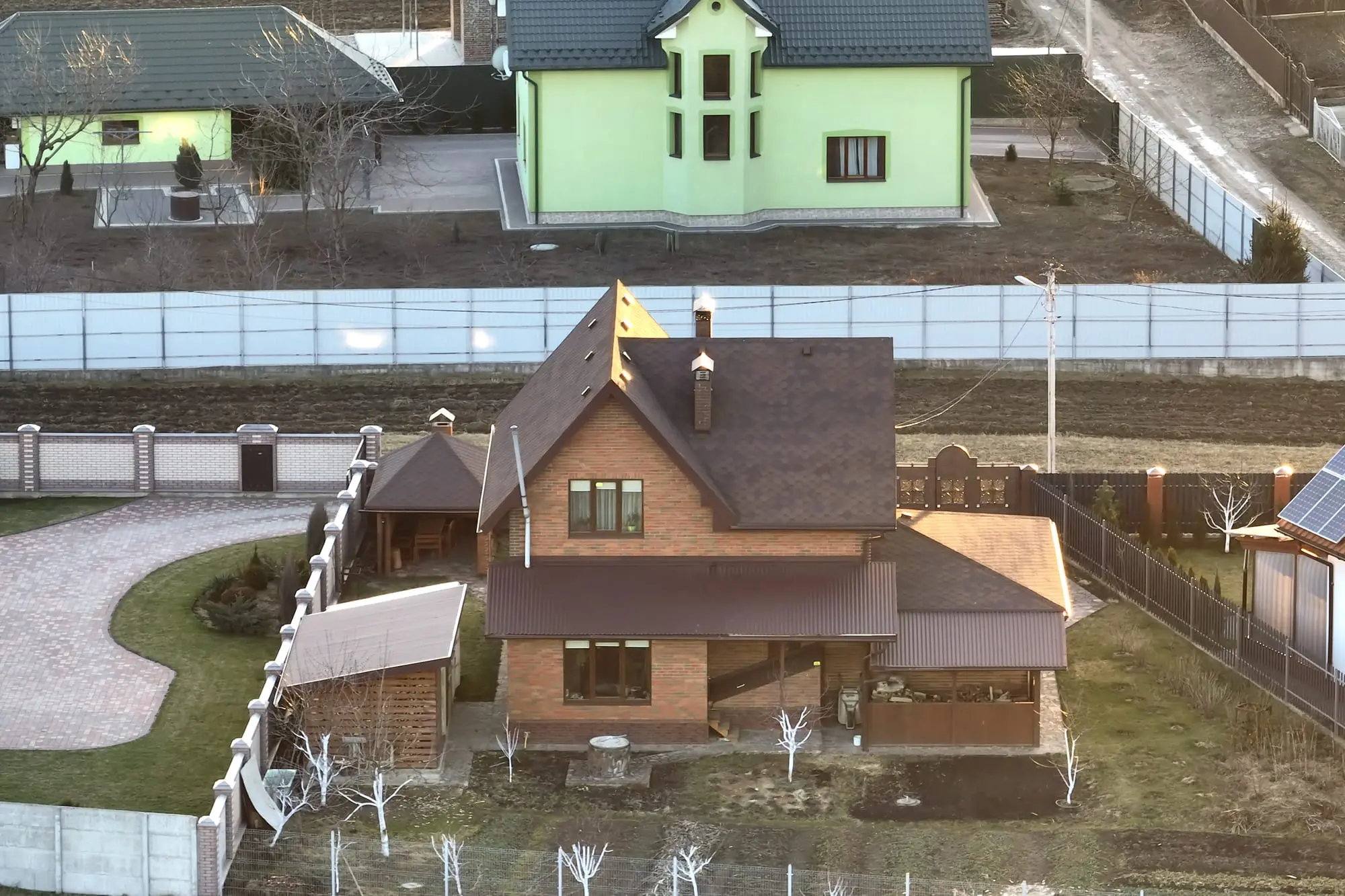
Anyone looking to sell a property in Forchheim must address the energy performance certificate no later than the start of the marketing process. There are two options to choose from: the energy demand certificate and the energy consumption certificate. They provide different information, have different levels of significance, and vary in cost. Which one is required for a given building depends on the year of construction and the size of the building.
Demand Certificate vs. Consumption Certificate: The Fundamental Differences
The demand certificate (also known as the calculated energy demand) determines a building’s theoretical energy demand based on the building’s structure, insulation, window quality, heating system, and ventilation system. It is calculated by an energy consultant using building data-regardless of how the building is actually used and how much energy the residents have consumed. The result: an objective, usage-independent metric for the energy quality of the building envelope and building systems.
The Energy Consumption Certificate (also: measured energy consumption) is based on actual energy consumption over the past three years. It is easier to generate and more cost-effective, but reflects the residents’ usage patterns: A frugal retired couple heats their home significantly less than a family of five, even if the building is identical. The consumption certificate is less meaningful for sales purposes, but is sufficient in many cases according to GEG.
Conclusion from the buyer’s perspective: An energy performance certificate with a poor energy class objectively shows the extent of renovation needs. A consumption certificate with an apparently good class can be misleading if the previous tenants were particularly frugal. Professionals in the real estate market-appraisers, buyer’s attorneys, banks-are aware of these differences.
In the practice of real estate marketing in Forchheim, the energy performance certificate plays an increasingly important role: Since 2014, the energy class has been a mandatory requirement in online listings on portals such as ImmobilienScout24 and immowelt. Buyers are increasingly filtering by energy class and rejecting properties in classes F and G unless there are concrete renovation plans. Forchheim property owners who can offer a property with a class D rating or better when selling have a measurable advantage in terms of how quickly the property sells.
Market Data 2026: When Which Certificate Is Required
| Building Type | Year of Construction (Building Permit) | Residential Units | Required Certificate |
|---|
| Single-Family Home / Twin Home (Old) | Before 11/01/1977 | < 5 | Energy Demand Certificate |
| Existing single-family homes / duplexes (renovated to WSchV 77) | before 11/01/1977 | < 5 | Energy consumption certificate possible |
| New single-family homes / duplexes | from 11/01/1977 | < 5 | Energy consumption certificate possible |
| Multi-family homes (all years) | all | ≥ 5 residential units | Energy consumption certificate possible |
| Historic buildings / buildings with special use | all | all | Energy demand certificate recommended |
| New construction | - | - | Energy demand certificate (building permit application) |
Source: Building Energy Act (GEG) § 79-81, as of January 2024; Federal Ministry of Housing, Urban Development, and Construction, Information Sheet on Energy Performance Certificates 2024.
For the most common scenario in Forchheim-a single-family home built before 1977 that has not undergone a major renovation-the energy demand certificate is required by law. The half-timbered buildings in Forchheim’s historic old town fall almost without exception into this category. Owners who rely on having a quick, inexpensive energy consumption certificate issued risk committing an administrative offense.
An energy performance certificate may only be issued by qualified professionals: architects, civil engineers, and energy consultants with specific training (pursuant to GEG §§ 88, 89). In Forchheim, there are several architectural firms and independent energy consultants who issue these certificates.
For the energy performance certificate, the issuer requires:
- Floor plan and cross-sections of the building (or on-site measurements)
- Year of construction and year of the last renovation work
- Insulation thicknesses (roof, basement ceiling, facade) or material specifications
- Heating system (boiler type, year of manufacture, fuel type)
- Hot water production
- Ventilation system (if available)
For the consumption certificate, heating cost statements from the last 3 years are required (heating oil: delivery receipts; gas: annual statements), along with information on the usable floor area and the heat source.
Tip for owners of older buildings in Forchheim: If the energy performance certificate already shows a poor rating (F, G), it is worth waiting to issue the certificate until after a planned renovation or presenting the renovation roadmap (iSFP) as an accompanying document in the sales brochure. This clearly shows buyers which measures are planned and how the energy rating can be improved.
Digital Energy Performance Certificate and QR Code. Since 2024, energy performance certificates in Germany have been issued by default with a QR code that links to the certificate registry at the German Institute for Building Technology (DIBt). Buyers and real estate agents can verify the authenticity of the certificate using this QR code. Anyone with an old certificate without a QR code should have a new certificate issued at the time of sale to avoid trust issues. In the past, fraudsters have used counterfeit energy performance certificates to advertise properties with a better energy class than they actually have.
Modernization recommendations in the energy performance certificate. According to Section 84 of the Energy Performance Certificate Act (GEG), recommendations for cost-effective measures to improve the building’s energy efficiency are a mandatory component of an energy performance certificate. These recommendations provide buyers with initial guidance on renovation priorities and can be proactively used during sales discussions: “Here are the three most cost-effective measures that will immediately improve your rating from Class F to D.” This transparent communication builds trust and facilitates the purchase decision.
> The valuation tool from leadmarkt.ch estimates the impact of the energy performance certificate on the selling price of your Forchheim property based on data-in just a few minutes and free of charge.
Forchheim boasts one of the most distinctive old town settings in the Nuremberg metropolitan region: the medieval Imperial Palace and the half-timbered buildings surrounding the historic market square are landmarks of the city. These buildings were generally constructed before 1977-meaning that single-family homes in this zone are automatically subject to the stricter energy performance certificate requirement.
At the same time, many of these historic buildings fall into energy classes F or G because they cannot be fully modernized due to historic preservation regulations. This is not a barrier to sale per se-buyers of old town properties in Forchheim generally know what they’re getting into. However, it is important that the energy performance certificate is issued correctly and is available in a timely manner.
The Regnitz region, a business hub with a thriving brewing industry and the up-and-coming Reuth industrial park, reports stable purchase prices for older properties according to the Forchheim Appraisal Committee (2025 Annual Report). Transparent documentation-including a correct energy performance certificate-is a key factor in building trust during the sales process.
In its 2025 Housing Report, the Bavarian State Office for Statistics notes the increasing proportion of buildings subject to mandatory energy performance certificates in sales transactions: In Bavaria, over 180,000 energy performance certificates were issued for transactions in 2025, with a clear trend toward demand-based certificates for older buildings.
For property owners in Forchheim, the regional significance of Franconian Switzerland as a tourist and residential destination is also relevant: vacation properties and second homes used for short-term rentals also require an energy performance certificate for new leases. While those offering their vacation home near Forchheim via Airbnb or similar platforms are not usually directly asked for the energy performance certificate for short-term rentals, there is a legal obligation to provide the certificate for longer-term leases (more than one year).
A practical tip for owners of properties in Forchheim’s Old Town: If you own a half-timbered building with a very poor energy rating (Class F, G, or H) and wish to sell it, you should not attempt to downplay the energy class in the listing. Buyers and financing banks carefully review the energy performance certificate. Honest communication that transparently identifies renovation potential and provides realistic cost estimates builds more trust and often leads to a smoother purchasing process than attempts to conceal the truth, which are later exposed during the due diligence phase.
Conclusion for Property Owners in Forchheim
Anyone wishing to sell a property in Forchheim must know the correct type of energy performance certificate: For single-family homes with a building permit issued before 1977 and fewer than 5 residential units, the energy demand certificate is mandatory-there is no way around it by opting for the cheaper energy consumption certificate. The costs (250 to 600 euros) are a good investment relative to the potential fine and the loss of buyer trust.
Before preparing for the sale, it’s worth checking the current market value of your Forchheim property: The valuation tool from leadmarkt.ch shows you how the energy performance certificate and energy class influence the achievable selling price-based on data and without registration.
The notary is required to document the presentation of the energy performance certificate when notarizing a real estate purchase agreement. Since the 2023 amendment to the Energy Performance Certificate Act (GEG), notaries in Bavaria are required to inform the owner of the obligation to provide the energy performance certificate and to record this in the purchase agreement. The absence of an energy performance certificate cannot block the notarization, but it increases the seller’s liability risk.
Important: The obligation to provide the certificate does not arise only at the notary appointment, but already at the first viewing. Anyone who advertises a property and does not specify an energy class, even though an energy performance certificate is available, violates § 16a GEG. Administrative proceedings are handled by the Forchheim District Office or the competent housing construction supervisory authority.
Under the EU Energy Efficiency Directive (EED), banks and savings banks have been required since 2023 to track and report the energy efficiency of their real estate loan portfolios. This has direct consequences for lending practices:
| Energy Efficiency Class | Typical Consequence in the Financing Review |
|---|
| A+ to B | Unproblematic financing, no special conditions |
| C to D | Standard financing, renovation roadmap optional |
| E to F | Some banks require a renovation plan as a loan condition |
| G to H | Some banks propose a reduction in the loan-to-value ratio |
In Forchheim, where part of the older building stock still has a rating of Class F or lower, the energy performance certificate can influence the buyer’s financing terms. Sellers who know that their property has a poor energy rating can take proactive steps: A renovation roadmap (iSFP according to GEG) that outlines the measures and costs provides the buyer’s bank with greater certainty and can lower the financing hurdle.
Many owners misread their energy performance certificate or do not read it at all. Three common misunderstandings:
1. Energy rating vs. energy efficiency class: The energy rating (in kWh/m²a) is an absolute number; the energy efficiency class (A+ to H) is a classification on a scale. Both are listed on the certificate but are often confused.
2. Primary energy demand vs. final energy demand: Primary energy demand takes into account the upstream energy production chain (e.g., power plant efficiency for electricity) and is always higher than final energy demand. Final energy demand is what counts for the energy efficiency class.
3. CO2 class: Starting in 2026, the CO2 Cost Allocation Act will be discussed more frequently in connection with the energy performance certificate. The CO2 class determines what proportion of CO2 costs is allocated to landlords and tenants-a separate document, but closely linked to the energy performance certificate rating.
Prepared by the my-home.de editorial team in collaboration with regional real estate analysts. Data as of: May/June 2026.