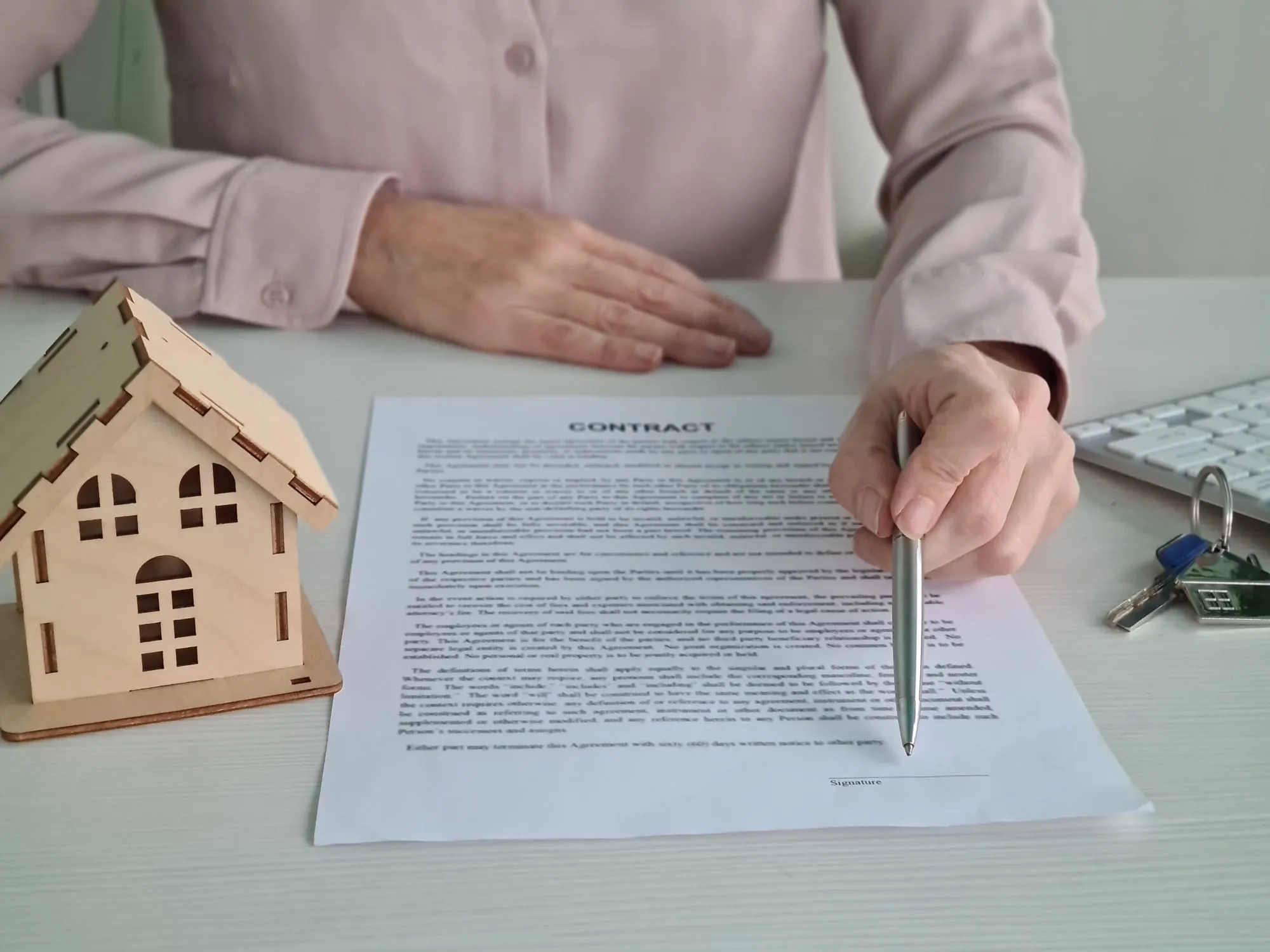
Anyone who owns a property in Erlangen that has been cut off from the public road network due to development or subdivision cannot simply invoke private law and manage without access. The German Civil Code (BGB) provides the isolated owner with a powerful tool under § 917 BGB: the statutory right of way. At the same time, § 917 BGB also protects the neighbor, who must tolerate this right, through a claim for compensation. Court practice in Erlangen shows that this provision is more frequently relevant in the Nuremberg metropolitan region than expected.
Legal Background: Section 917 BGB and Its Systematics
Section 917(1) BGB states: “If a property lacks the connection to a public road necessary for its proper use, the owner may require the neighbors to tolerate the use of their properties to establish the necessary connection until the deficiency is remedied.”
The right of way in case of necessity is a statutory obligation that arises directly from the law as soon as its prerequisites are met. It does not depend on an agreement between the parties involved-the owner of the isolated property can enforce the right of way in court in the event of a dispute.
The right of way is subsidiary to a contractual right of way: If a right of way is already registered in the land register or if there is a public-law obligation to provide access, § 917 BGB does not apply. Even de facto access (without a formal right) does not preclude the right of way-this right only ceases to apply once access is legally secured.
The provision is related to § 918 BGB, which excludes the right of way if the lack of connection was caused by an arbitrary act of the owner. This is significant in Erlangen practice regarding property divisions and sales: Anyone who sells a connecting parcel and thereby cuts off their own property cannot invoke § 917 BGB-rather, they must restore access at their own expense, typically by repurchasing a right of way or through another suitable measure.
The term “proper use” in § 917 BGB is determined by the approved intended use of the property. A residential property must be accessible to residents and their vehicles; a garden plot may require only pedestrian access. The requirements may change with the intended use: A property originally used as garden land that is now being developed is subject to higher access requirements.
Procedure and Compensation: Right of Way Rent and Judicial Enforcement
The procedure for enforcing the right of way typically begins with an out-of-court demand to the affected neighbors. The owner of the landlocked property determines which neighboring property the right of way should cross-this must be done according to the criterion of the least intrusion: Of several possible routes, the one that least impairs the servient property must be chosen.
| Aspect | Provision | Note |
|---|
| Basis of claim | § 917(1) BGB | Statutory right to tolerance |
| Compensation | § 917(1) sentence 2 BGB (monetary rent) | Determined by the court if necessary |
| Exclusion | § 918 BGB | Arbitrary creation |
| Cost bearing (right of way) | Owner of the benefited property | Ongoing maintenance |
| Jurisdiction | Erlangen Local Court (Land Court) | Location of the disputed property |
| Registration | Optional, but recommended | Security for legal successors |
Source: WEG Act (as of the 2020 WEG reform + 2026 amendments), BGB, GNotKG table, Bavarian Justice Portal, Nuremberg/Fürth/Erlangen Land Registry, as of Q1/Q2 2026.
The right of way rent, as a form of compensation, is payable as a recurring monetary rent, not as a one-time payment. Its amount is based on the reduction in value of the servient property resulting from the encumbrance. In the case law of the Erlangen Local Court, annuity amounts ranging from 30 to 200 euros per month for simple footpath rights and 100 to 500 euros for emergency access roads suitable for motor vehicles are considered realistic, depending on location and intensity of use.
If no agreement can be reached, the owner of the landlocked property files a suit for tolerance with the Erlangen Local Court. The court decides on the validity of the claim and, if necessary, sets the annuity at the same time. In urgent cases, interim legal protection is also possible if access is immediately blocked.
Practice in Erlangen: New Neighborhoods and Historic Parcels
Erlangen is a university town with dynamic residential development. The Siemens settlement and Friedrich-Alexander University (FAU) have led to a dense, heterogeneous building structure. In neighborhoods such as Büchenbach, Bruck, or the new development areas north of the Regnitzgrund, access issues regularly arise due to property subdivisions.
The right of way issue occurs particularly frequently when larger properties are subdivided and the rear parcels are sold without guaranteed access. Buyers who find no registered right of way in the land registry but who are effectively accessed via the front property should clarify before purchasing whether a contractual right of way exists. Without such a right, only the right of way under § 917 BGB remains-which, while legally valid, entails legal disputes and uncertainties regarding the amount of compensation.
> The valuation tool from leadmarkt.ch helps you assess the impact of access rights on the market value of your Erlangen property-data-driven, in just a few minutes.
The Erlangen City Appraisal Committee has highlighted in annual reports the rising number of second-row properties that are accessible only via rights of way. These properties are traded on the market at a discount of 8 to 20 percent compared to properties with regular access. Buyers factor in the risk of disputes and uncertainty regarding the rent amount, as well as the lack of a public-law development permit for building permits.
In rural outlying areas of the Erlangen city limits-such as the villages that were incorporated into Erlangen as part of the 1972 regional reform-plots of land without formal right-of-way are still commonly found; these have effectively been accessed via neighboring properties for decades. For these properties, it is essential to clarify the access situation and, if necessary, establish a formal right of way before a sale.
Limits of the Right of Necessity: Subsidiarity and Public Building Law
The right of necessity under § 917 BGB is a matter of civil law-it does not replace public-law access. The Bavarian Building Code (BayBO) requires secured access within the meaning of § 34 or § 30 of the Federal Building Code (BauGB) for a development to be permissible. A mere private-law right of way under § 917 BGB is generally not sufficient to secure access under building law.
This means: Anyone who wishes to develop a property via a right of way and build on it must additionally demonstrate development secured under public law-typically through a right of way registered in the land registry or a development easement. The Erlangen Building Authority requires this security before issuing a building permit.
Further limitations of the right of way are: It exists only for “proper use”-what constitutes such use is determined by the approved intended use of the property. Luxurious or disproportionate uses do not justify a right of way (e.g., heavy construction vehicles on a narrow footpath). The person entitled to the right of way must bear the costs for the construction and maintenance of the path (Section 917(2) of the German Civil Code). The right of way establishes only a right of tolerance, not ownership of the path area.
Local Nuance: FAU Campus and Erlangen Urban Development
Erlangen is characterized by the FAU and the Siemens Campus. In the vicinity of the university, there are many university-adjacent residential areas where older building structures meet newer projects. The Tennenlohe district, with its technology park, and the Eltersdorf district feature property situations in which historical development issues only become apparent upon sale or renovation.
Erlangen’s urban development is shaped by the expansion of Siemens AG and FAU. Many building complexes and properties belong to these institutions and are sold or subdivided at irregular intervals. Such subdivisions regularly give rise to access issues that must be resolved through the establishment of easements or, if necessary, through the statutory right of way. Notaries in the Middle Franconia notarial district are familiar with these situations.
Conclusion for Property Owners in Erlangen
The right of way under Section 917 of the German Civil Code (BGB) is an important safeguard for owners of landlocked properties-it arises by operation of law and can be enforced in court without an agreement. At the same time, it is merely a stopgap measure: A contractually agreed-upon right of way entered in the land register offers significantly greater legal certainty and avoids disputes over the amount of compensation and the route of the path.
For buyers of properties in Erlangen: Check Section II of the land register before purchasing, and if there is no guarantee of access, insist on a notarized solution. Before taking any concrete steps, it’s worth checking out the valuation tool from leadmarkt.ch - it takes development risks into account and shows you the realistic market value of your Erlangen property.
Right of Way Rent: Calculation and Potential for Dispute
Anyone exercising a right of way must pay a reasonable rent pursuant to Section 917(2) of the German Civil Code (BGB). This rent is not a symbolic amount-it is intended to compensate for the economic disadvantage suffered by the encumbered property owner.
In Erlangen, appraisers typically calculate the right of way rent based on the standard land value, the area of the path used, and the extent of the impairment of use. A passable path across a valuable residential property in Büchenbach-West can generate an easement rent of 800-2,000 euros annually-an amount that adds up significantly over 20-30 years.
Disputes often arise over the route of the path (which route is the least disruptive?), the amount of the rent, and maintenance obligations (who pays for paving?). The Erlangen Local Court has jurisdiction over right-of-way rent claims; the Nuremberg-Fürth Regional Court handles appeals.
The practical recommendation for all parties involved: It is better to enter into a notarized right-of-way agreement and thereby clearly settle all issues (route, fee, maintenance, term) once and for all. This involves a one-time notary fee, but is significantly cheaper than a decades-long legal dispute over the right of way.
Right of Way and Building Permits: Proof of Access
In Bavaria, the issuance of a building permit requires that the building lot be sufficiently developed-i.e., that it has secure access to a public thoroughfare. A path that is merely used in practice or a statutory right of way is often insufficient as proof for the building authority. The Erlangen-Höchstadt District Office and the Erlangen City Planning Office generally require an access route secured in the land register.
If a property in Erlangen or the surrounding area is only served by a right of way and is to be developed, the owner must establish a formal right of way in the land registry before submitting a building application. This requires an agreement with the owner of the servient property-which in practice means negotiations regarding the route, width, right of use (pedestrian, motor vehicle), and compensation.
Without this secured right of way, the building permit is routinely denied. Therefore, anyone who purchases a property in Erlangen that is accessible only via a right of way and wishes to build on that property must resolve the access issue before the purchase price is paid-otherwise, the property is effectively not buildable.
The Erlangen Local Court, as the competent land registry and probate court, is familiar with this issue and can assist with the proper drafting of applications for the establishment of rights of way.
Prepared by the my-home.de editorial team in collaboration with regional real estate analysts. Data as of: Q1/Q2 2026.